Insight
From AI anxiety to AI advantage: a professional's field guide

I talk to a lot of professionals carrying some version of this, so let's just name it: a low hum of uncertainty about whether you're keeping up with AI. It shows up as a scroll past yet another launch you haven't tried, a colleague casually mentioning a tool you've never heard of, a quiet worry that the ground is shifting under your career faster than you can react to it.
The standard advice is to fix that with more. More tools, more courses, more newsletters. It rarely works, and there's a simple reason why.
The anxiety isn't about a shortage of tools
You could install every AI app released this month and feel exactly as uneasy tomorrow morning. The worry comes from somewhere else: you have no real idea where you stand. No baseline. No honest sense of whether you're ahead, behind or perfectly fine. Just fog, and fog is where worry breeds.
Think about how this works anywhere else in life. You don't get fitter by panic-buying gym equipment. You find out where you are, pick the things that matter, and train them. Readiness for AI-native work is no different. The feeling doesn't lift until it has a shape.
Replace the feeling with a baseline
So start there. Measure your readiness across the dimensions that genuinely matter for AI-native work, and get an Agent Boss Score built on real evidence rather than guesswork. Not a vague number, but an honest read on your strengths and your gaps.
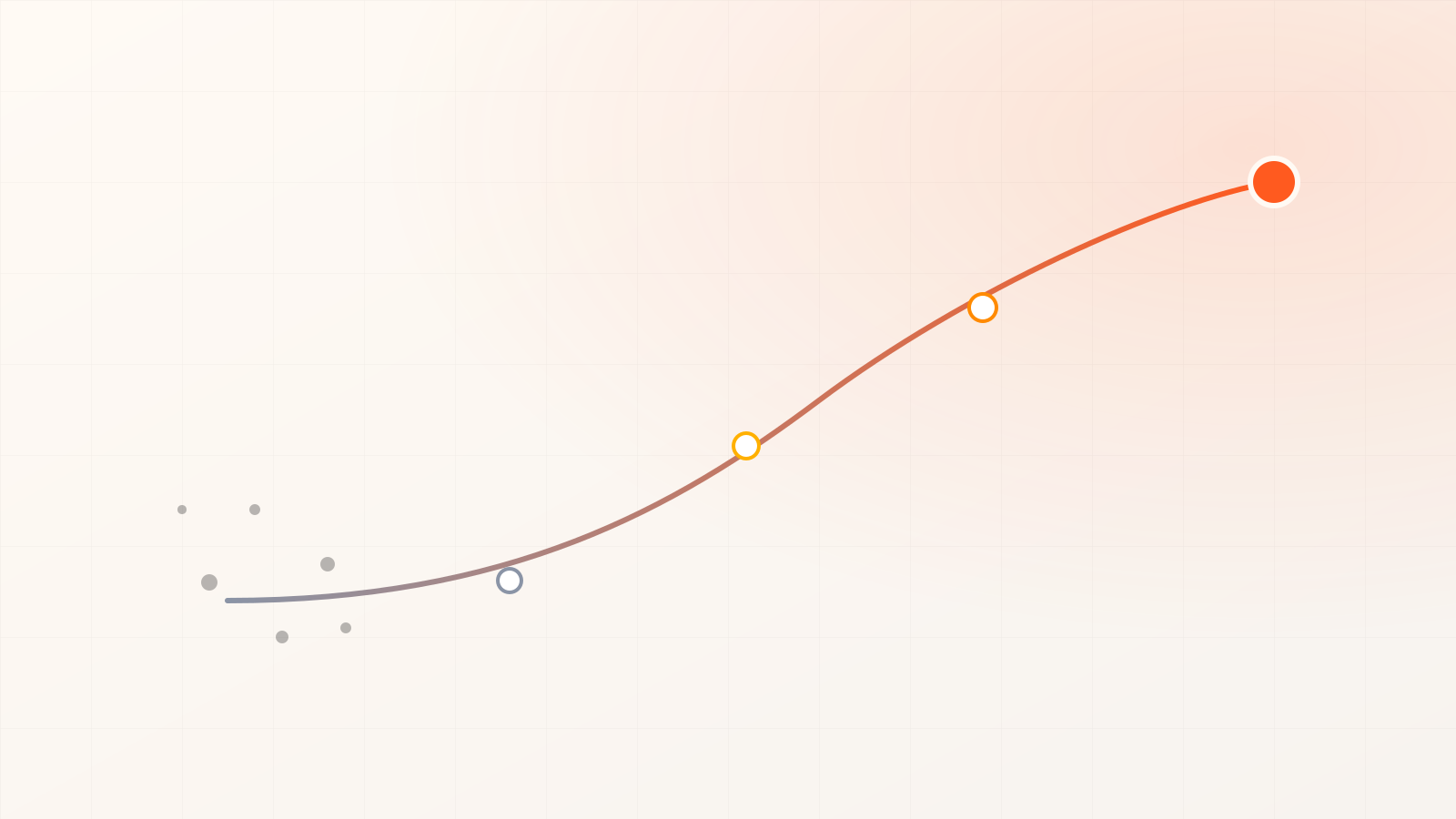
The moment you have that, everything changes character. The worry stops being a cloud and becomes a checklist. You can see your weakest dimensions. You know what to work on first. The question shrinks from "am I going to be left behind?" to "what do I practise this week?", and the second one you can actually answer.
From there it's a practice, not a panic. Target the gaps that matter most. Build in short, deliberate sessions rather than heroic weekends. And turn that effort into verified evidence you can point to: proof of what you can do, not just claims on a CV.
And the momentum compounds quietly. Each session is small on its own, but a few honest weeks in you stop bracing for the next announcement and start treating it as something to test, not something to fear. That shift, from defensive to curious, is most of the battle. It's also the difference between people who get swept along by AI and people who get good at directing it.
Here's the honest version of what everyone half-says: AI won't take your job. But it will reshape it, and the people who quietly built this capability while everyone else doom-scrolled are the ones who will lead the work that matters. That isn't a threat. It's the most reassuring part of the whole shift, because the advantage isn't reserved for the naturally gifted or the lucky few.
It's available to anyone willing to measure honestly and build consistently. That's the whole game.