Insight
Why your org chart can't see your best AI talent

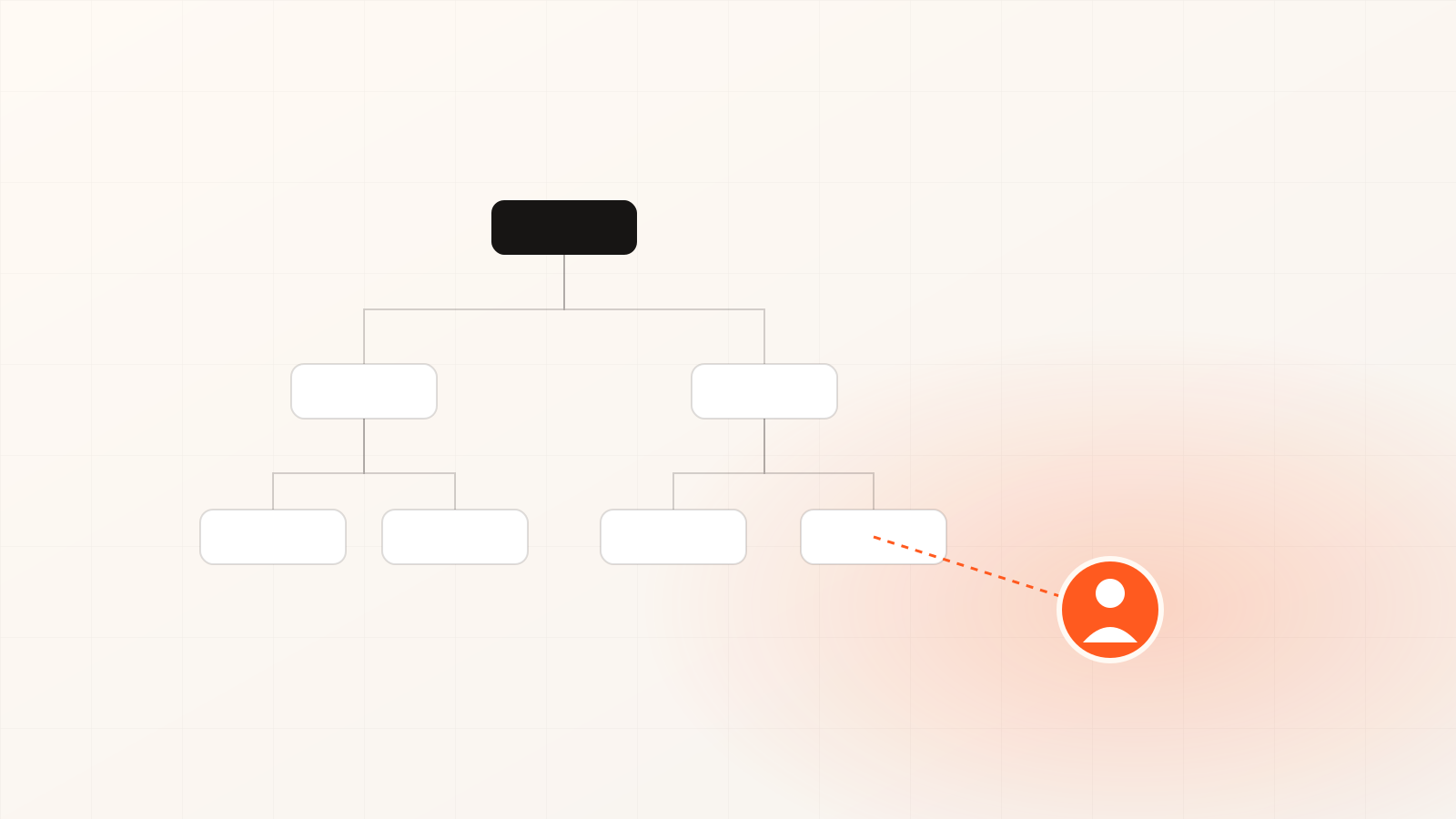
The org chart was built to answer one question: who reports to whom. It maps authority. It maps tenure. It is very good at telling you who sits where. And it says almost nothing about who in your organisation can actually orchestrate AI agents to deliver real outcomes.
That gap used to be harmless. It isn't any more.
Readiness doesn't track seniority
Here's the thing I keep telling leadership teams, and nobody likes to put it on a slide: AI-readiness and seniority have almost nothing to do with each other. The most capable Agent Bosses in a company are routinely two or three levels down from where you'd think to look. People who quietly rewired how they work over the last eighteen months while their job title sat completely still.
Why? Because orchestration is learned by doing, and the people doing the most of it tend to be closest to the actual work, not the ones in the strategy offsite. A mid-level analyst who now runs a fleet of agents to do in an afternoon what used to take her team a week is, in the only sense that matters now, ahead of the director two floors up who is still forwarding articles about it.
The hierarchy can't see her. So transformation programmes walk straight past her and pour budget into the people whose titles look right instead.
Capability is a different map
It cuts both ways. The same blind spot that hides your strongest talent also hides your real exposure. A senior, expensive, business-critical role can be sitting on capability that has quietly gone stale, and the org chart will keep reporting it as safe right up until the work demands something the person can no longer do.
So you need a different map, one drawn from measured capability rather than reporting lines. That is the job of the Agent Boss Score: an evidence-based readiness baseline across teams, functions and leadership, independent of title. It tells you who can orchestrate AI-native work today, who is close, and where the gaps actually sit, regardless of where any of them appear on the chart.
In every workforce I've looked at, what surfaces is almost always the same shape. Hidden strength in places nobody was looking. Exposure exactly where the hierarchy assumed safety. Neither shows up until you measure for it. And once you do, the moves get obvious. You promote the hidden Agent Bosses into the orchestration roles they are already doing in practice, and you put real development behind the stale ones before the gap turns into a failure nobody saw coming.
None of this makes the org chart wrong. It answers its own question fine. It just answers the wrong question for the decision in front of you, which is no longer "who is in charge of whom" but "who is ready to lead the work, wherever they happen to sit." The firms that win the next two years won't be the ones with the tidiest hierarchy. They'll be the ones that went looking for the talent it couldn't see.